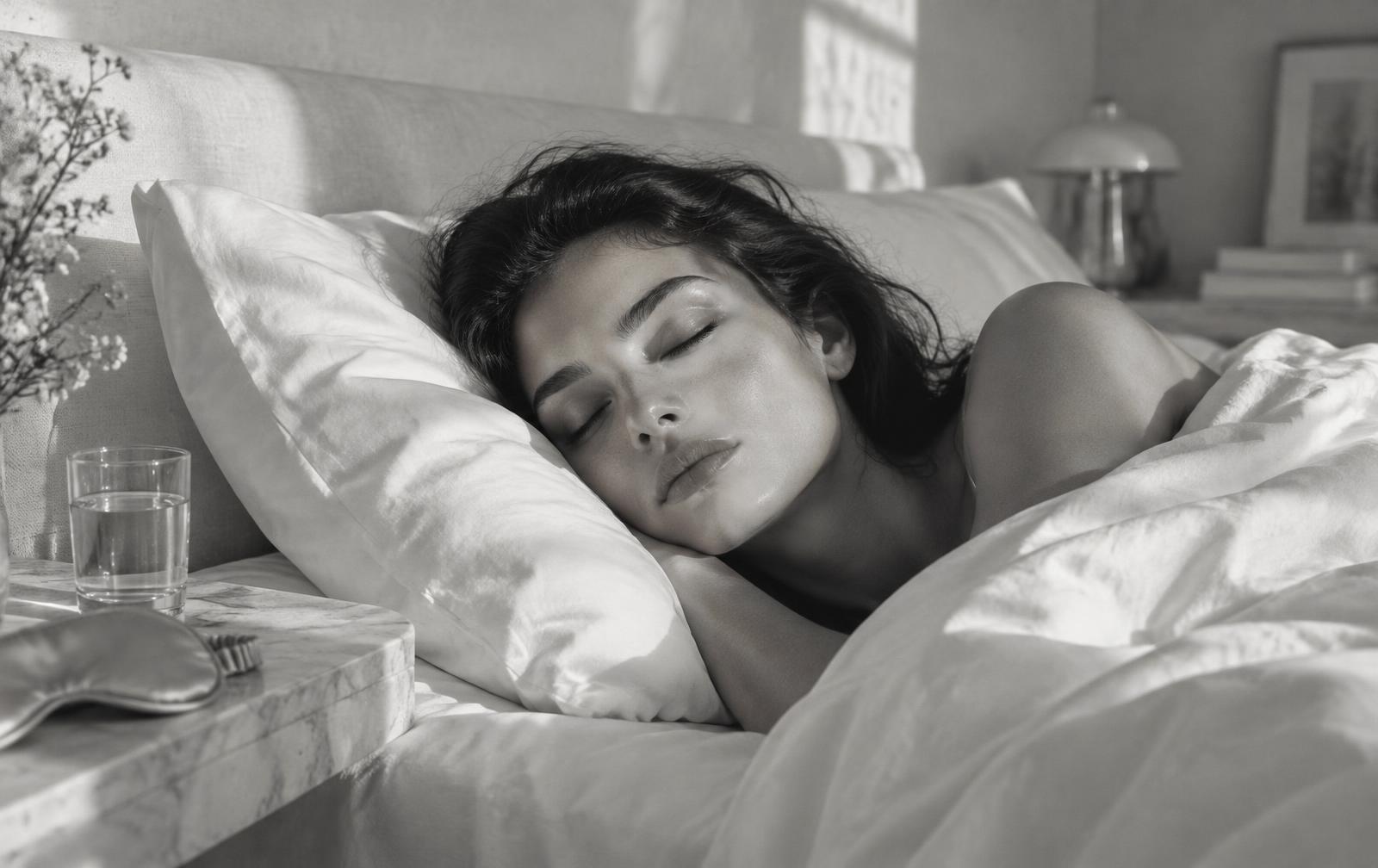
Of all the treatments in my atelier, the most powerful one costs nothing, requires no appointment, and is skipped nightly by nearly every woman I know. Let us talk about sleep, the only beauty treatment humans routinely brag about avoiding.
"Beauty sleep" sounds like something embroidered on a pillow, but it is one of the most literal phrases in the language. Skin runs on a circadian rhythm, and it schedules its heavy labor for the night shift. While you sleep, blood flow to the skin rises. Cell turnover and repair accelerate, peaking in the small hours. Growth hormone, the body's chief repair signal, releases in deep sleep and directs the rebuilding of tissue, collagen included. Overnight, your skin is a construction site working under lights. Sleep is not rest from repair. Sleep is when repair happens.
What the skin does with a short night
Deprive the site of its shift and the morning report is immediate: dullness, puffiness, shadows, makeup that sits strangely. Strangers can see it. Studies have shown that observers rate sleep-deprived faces as less healthy and less attractive, which is science confirming what every mirror has been saying for free.
The long-term ledger is worse. Chronic short sleep elevates cortisol, and cortisol, as regular readers know, treats collagen the way moths treat cashmere. Poor sleepers show weaker barrier recovery, more inflammation, and faster visible aging. Every serum on your shelf is working against a headwind if the body applying it is exhausted.
How to sleep like your skin depends on it
Because it does. Keep a consistent bedtime; the skin's rhythm loves routine as much as your fibroblasts do. Cool, dark room. The phone charges elsewhere, and I say this with love and full knowledge that you will negotiate. No screens in the final half hour; the blue light delays melatonin, and melatonin, conveniently, is also an antioxidant your skin uses at night. A silk pillowcase is not essential, but it is a pleasure, and it spares your face the creases of a cotton argument.
And apply your evening skincare with intention, because nighttime is when the barrier is most receptive. Your retinal and your peptides work the night shift alongside the rest of the crew.
In Europe, no one apologizes for rest. The shutters close, the town goes quiet, and everyone understands that tomorrow's radiance is being manufactured. Adopt the philosophy, if not the shutters. I will handle the treatment room. You handle the ten o'clock curfew, and together we will be unstoppable.